

 In today’s competitive B2B market, effective B2B lead generation is essential for reaching the right prospects and creating new business opportunities. A well-researched and verified B2B lead list can help businesses reach the right decision-makers, improve outreach, and build a stronger sales pipeline.
However, building a high-quality lead list is more than simply collecting company names and email addresses. The information needs to be relevant, accurate, and aligned with your target market.
In this guide, we explain the key steps involved in building a reliable B2B lead list.
What Is a B2B Lead List?
A B2B lead list is a collection of business prospects that may be interested in a company’s products or services.
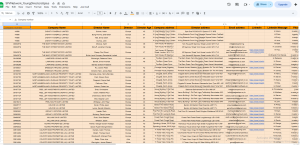
Depending on your campaign requirements, a B2B lead list may include:
- Company name
- Website
- Industry
- Company location
- Company size
- Decision-maker name
- Job title
- Business email address
- LinkedIn profile
- Phone number
- Other relevant business information
The exact information required depends on the purpose of the campaign and the target audience.
1. Define Your Ideal Customer Profile
Before collecting any data, clearly define who you want to target.
Consider factors such as:
- Industry
- Country or location
- Company size
- Annual revenue
- Number of employees
- Job titles
- Business type
- Products or services
- Other relevant characteristics
For example, instead of searching for “all UK businesses,” a campaign could target UK-based construction companies with 10–100 employees and specific decision-makers such as Managing Directors or Procurement Managers.
A clearly defined target audience makes the research process more focused and helps reduce irrelevant leads.
2. Find Relevant Companies
Once your target criteria are defined, the next step is to identify companies that match those requirements.
Business directories, company websites, professional networks, industry databases, search engines, and other research sources can be used to identify potential companies.
The goal is not simply to collect as many companies as possible. The goal is to find companies that actually fit your ideal customer profile.
3. Identify the Right Decision-Makers
Finding the right company is only part of the process. You also need to identify the people who are responsible for purchasing decisions or business partnerships.
Depending on the industry, relevant job titles may include:
- CEO
- Founder
- Managing Director
- Owner
- Sales Director
- Marketing Director
- Procurement Manager
- Operations Manager
- Business Development Manager
Targeting the right decision-maker can make your outreach more relevant and effective.
4. Verify the Data
Data accuracy is one of the most important parts of B2B lead generation.
Business information can become outdated because employees change positions, companies change websites, and email addresses become inactive.
Before using a lead list for outreach, important information should be reviewed and verified wherever possible.
This can include checking:
- Company information
- Website
- Job title
- Contact information
- Email validity
- Location
- Industry
- Other campaign-specific requirements
Good data verification helps reduce duplicate, outdated, and irrelevant records.
5. Organize the Lead List
A well-organized lead list is easier to use and manage.
A typical B2B lead database can be organized using columns such as:
| Company | Website | Contact Name | Job Title | Location | Industry |
|---|
Keeping the information structured also makes it easier to import leads into CRM systems, spreadsheets, or outreach platforms.
6. Prioritize Quality Over Quantity
A large database does not necessarily mean a successful lead generation campaign.
For example, 1,000 poorly targeted leads may be less valuable than 300 highly relevant and verified prospects.
A quality-focused approach considers:
Relevance + Accuracy + Decision-Maker + Verification
These factors are often more important than simply increasing the number of records.
7. Keep Your Data Updated
Lead generation is not a one-time activity. Business information changes over time.
Companies may:
- Change their contact information
- Hire new decision-makers
- Move locations
- Change their websites
- Expand into new markets
- Stop operating
Regularly reviewing and updating your database can help maintain its value over time.
Why High-Quality B2B Lead Generation Matters
A properly researched lead list can help businesses:
- Reach more relevant prospects
- Reduce time spent on manual research
- Improve sales outreach
- Build targeted prospect databases
- Support email marketing campaigns
- Improve CRM data quality
- Identify new business opportunities
The key is to focus on the right prospects rather than simply collecting large amounts of data.
Final Thoughts
Building a high-quality B2B lead list requires research, attention to detail, data verification, and a clear understanding of the target market.
Whether you are building a prospect database for sales outreach, email marketing, partnership development, or business expansion, accurate and relevant data can provide a strong foundation for your campaign.
If your business needs help with B2B lead generation, data research, contact list building, or lead verification, a professional research team can help you build a targeted database based on your specific requirements.
Need a targeted B2B lead list for your business?
Contact us to discuss your requirements and learn how we can help with professional lead generation and data research.